Innovating with Kindness

Pei Hwa Hackathon 2026 challenges participants to take an active role in shaping the future by developing forward-thinking, sustainable, and impactful solutions.

Innovating with Kindness

Pei Hwa Hackathon 2026 challenges participants to take an active role in shaping the future by developing forward-thinking, sustainable, and impactful solutions.

Innovating
with
Kindness

Pei Hwa Hackathon 2026 challenges participants to take an active role in shaping the future by developing
forward-thinking, sustainable, and impactful solutions.

Hackathon Overview

Innovating with Kindness:
Caring for People and the Planet

In an increasingly complex and fast changing world, innovation is no longer just about advancing technology. It is about advancing humanity. As we navigate challenges such as climate change, social inequalities, and rapid technological growth, there is a growing need to design solutions that are not only effective, but also compassionate and responsible.

While globalisation and technological progress continue to connect Singapore to the world, they also bring pressing questions. How might we care for vulnerable communities? How can we protect our environment while continuing to grow? And how can innovation be used as a force for good?

This year’s theme invites participants to reimagine innovation through the lens of kindness, placing people and the planet at the heart of every idea. It calls for thoughtful, human centred solutions that uplift communities, promote inclusivity, and contribute to a more sustainable future.

The Pei Hwa Hackathon 2026 is more than a competition. It is a platform for young changemakers to design with empathy, act with purpose, and create meaningful impact. Because the future we build should not only be smarter, but kinder.

Are you ready to take on the challenge?

Are you ready to take on the challenge?

Are you ready to take on the challenge?

Hackathon Overview

Innovating with Kindness: Caring for People
and the Planet

In an increasingly complex and fast changing world, innovation is no longer just about advancing technology. It is about advancing humanity. As we navigate challenges such as climate change, social inequalities, and rapid technological growth, there is a growing need to design solutions that are not only effective, but also compassionate and responsible.

While globalisation and technological progress continue to connect Singapore to the world, they also bring pressing questions. How might we care for vulnerable communities? How can we protect our environment while continuing to grow? And how can innovation be used as a force for good?

This year’s theme invites participants to reimagine innovation through the lens of kindness, placing people and the planet at the heart of every idea. It calls for thoughtful, human centred solutions that uplift communities, promote inclusivity, and contribute to a more sustainable future.

The Pei Hwa Hackathon 2026 is more than a competition. It is a platform for young changemakers to design with empathy, act with purpose, and create meaningful impact. Because the future we build should not only be smarter, but kinder.

List

Registration & Training Day
9 April 2026, Thursday 3 to 5pm

Complete your registration and collect the hackathon kit on this day. Training will also be held to ensure all participants are equipped with the necessary basic skills.

List

Carnival & Showcase Day
3 June 2026, Wednesday 8am to 3pm

The day where all participants will gather and showcase their work. Please check back soon for more information! View last year media here.

Hardware & Software

Components & Kit

A microcontroller is a small, programmable device that can be used to control or automate simple tasks. It works by receiving input from its surroundings, processing that information based on instructions you give it, and then triggering specific actions. Microcontrollers are often used in projects to help students learn how to think logically, solve problems, and create interactive solutions. They’re useful for building prototypes, experimenting with ideas, and learning how technology can be applied in everyday life.

For Pei Hwa Hackathon 2026, participants are given the option to choose between ‘Micro:bit’ or/and ‘Unihiker’ as their microcontroller for their project. Both microcontroller consist of various features, please refer to the following for the technical specifications.

Option #1
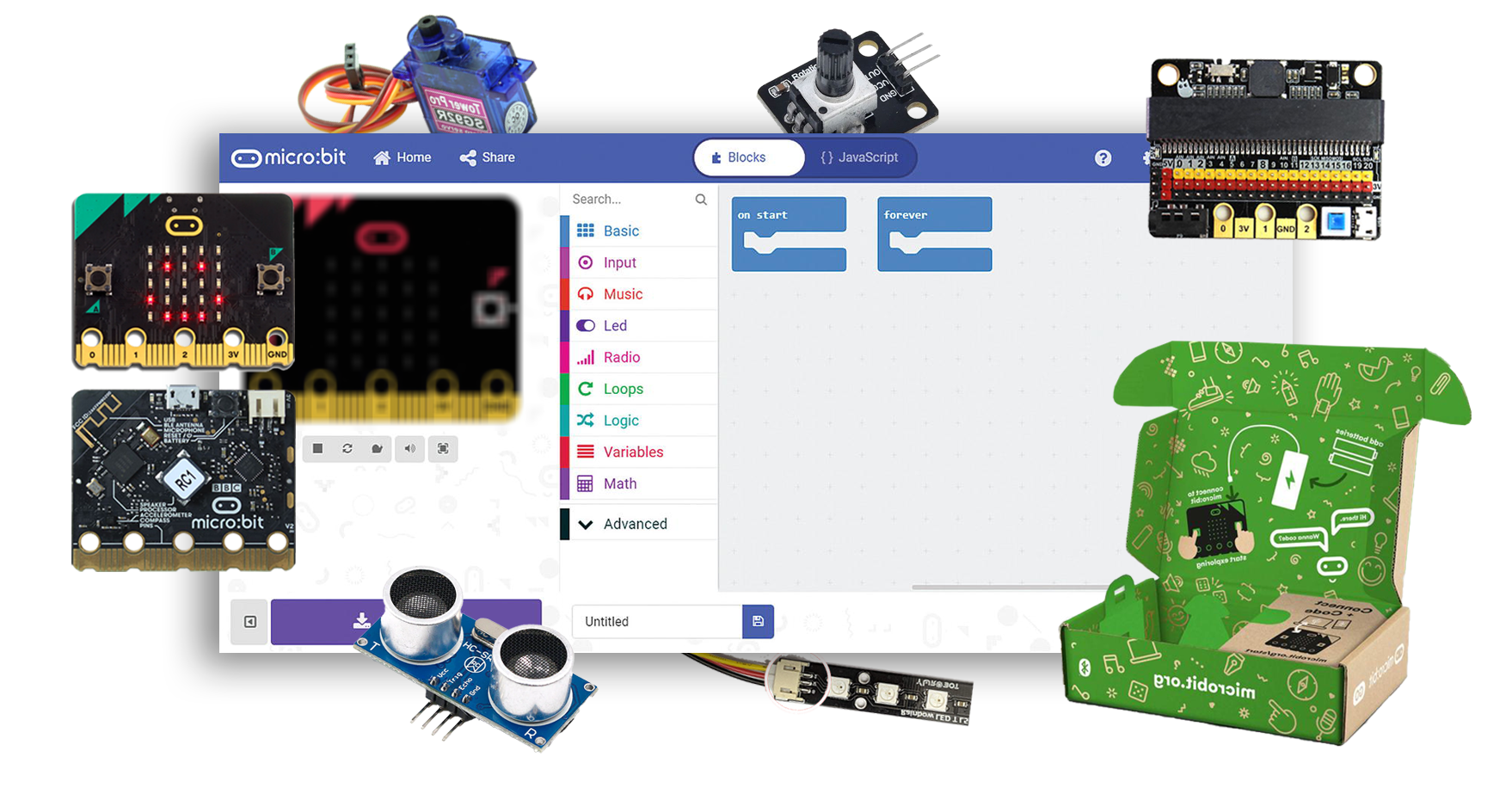
Micro:bit + External Components

Image above for reference. No kit will be given for this option.

You are not limited to the number of external components used with the microcontroller. Please view the next section (learning tutorials) for basics on using micro:bit.

There are no installation required for this option and students can achieve their coding (block-based/syntax) on makecode.

Option #2
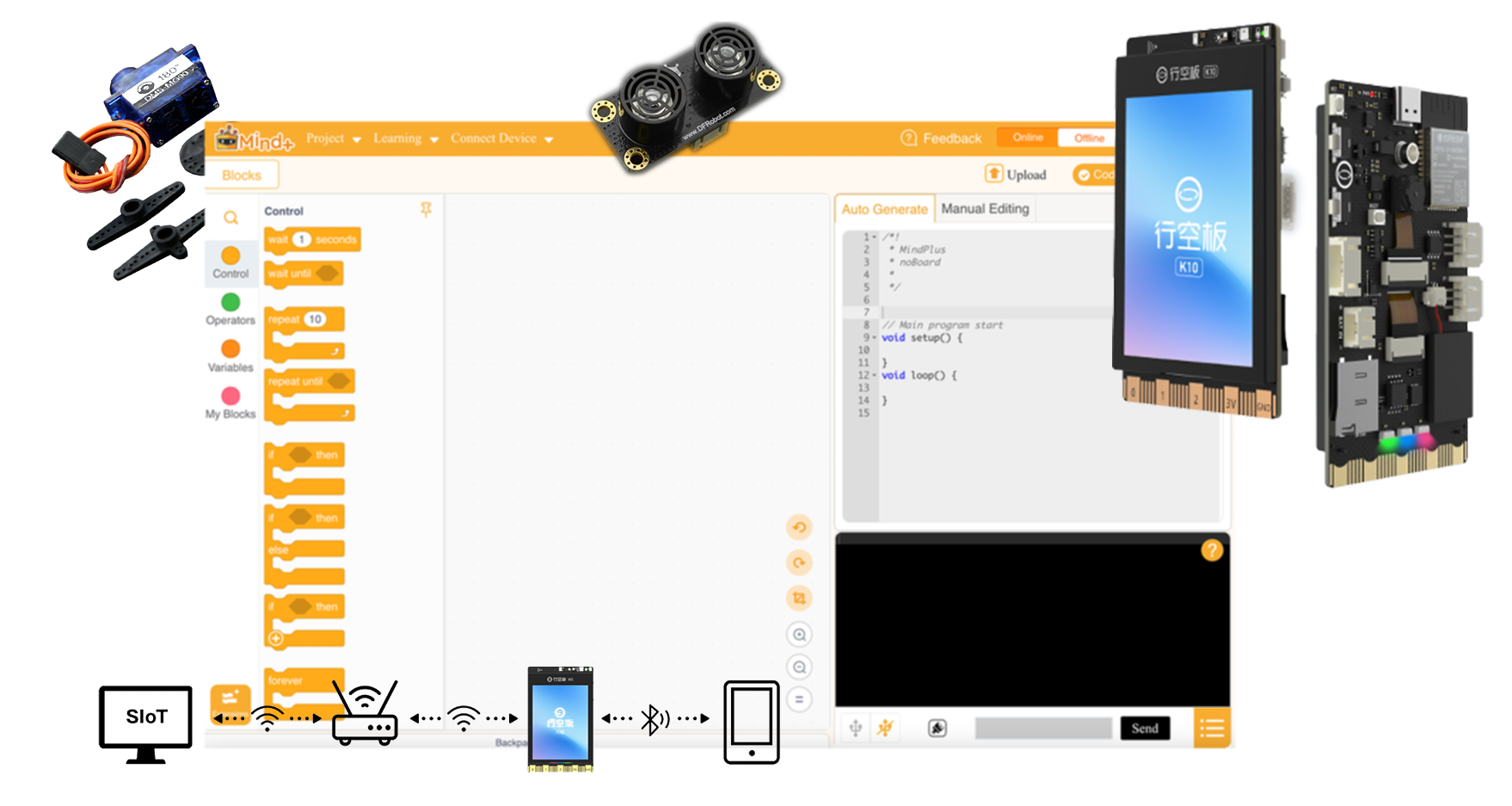
Unihiker + External Components

Only this kit will be distributed to confirmed participants
Kit consists of the following:
  • 1x Unihiker (microcontroller)
  • 1x Servo Motor (180 deg)
  • 1x Ultrasonic Sensor

Featuremicro:bit (V2)UNIHIKER
Programming
Block-based, Python, JavaScript via MakeCodeBlock-based, Python via Mind+
User Interface5×5 LED matrix display2.8″ color touchscreen
ConnectivityBluetooth onlyBuilt-in Wi-Fi & Bluetooth
Computing PowerLowerHigher
Input MethodsButtons, onboard sensors, external inputsTouchscreen, USB, sensors via pins
Output MethodsLED matrix, connected componentsScreen display, connected components
CameraN/AIntegrated camera & built-in algorithms for offline image detection
MicrophoneYes (built-in)Integrated microphone & built-in algorithm for offline speech recognition
SpeakerYes (built-in)Integrated speaker & built-in algorithm for offline speech synthesis
Power SourceUSB, battery packUSB, battery (external)
IoT/AI CapabilitiesLimited AI features. Possible with external modulesBuilt-in support for AI & IoT tasks
ExpansionI/O pins for sensors and accessories or breakout boardRich I/O pin support for sensors, modules or breakout board

Questions on components related? Please check out the FAQ below!

Learning Tutorials

Option #1
MakeCode & Micro:bit

01

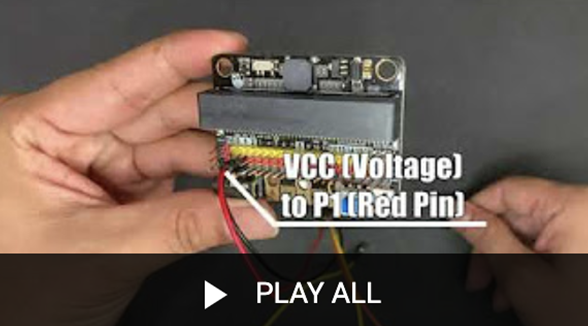
Introduction to Hackathon & Hardware/Software

service
02

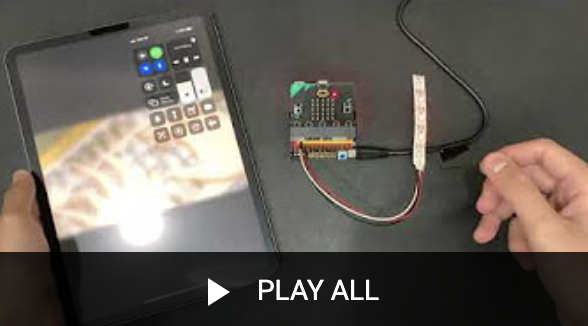
Understanding & using External Components

service
03

AI & Machine Learning with micro:bit v2

service
04

Final Activities & Design Thinking + Prototyping

service

Download Training Guide in PDF

Option #2
Mind+ & Unihiker K10

01

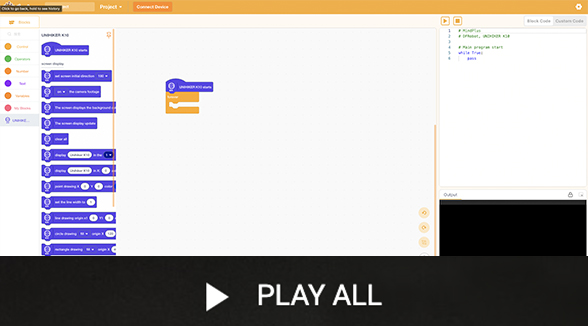
Introduction & Using Mind+ with Unihiker K10

service
02

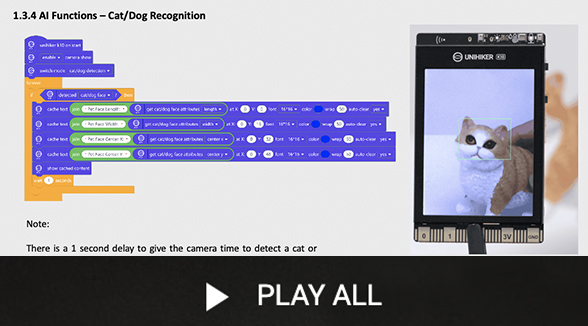
Using Unihiker K10 and the basics features

service
03

Understanding & using External Components

service
04

Internet of Things (IoT) + Design Thinking

service
03

AI & Machine Learning with micro:bit v2

service
04

Final Activities & Design Thinking + Prototyping

service
03

Understanding & using External Components

service
04

Internet of Things (IoT) + Design Thinking

service

Download Training Guide in PDF

Download Training Guide in PDF

Project examples

Real-life Applications

Micro:bit v2 + Soil Moisture Sensor + Water Pump

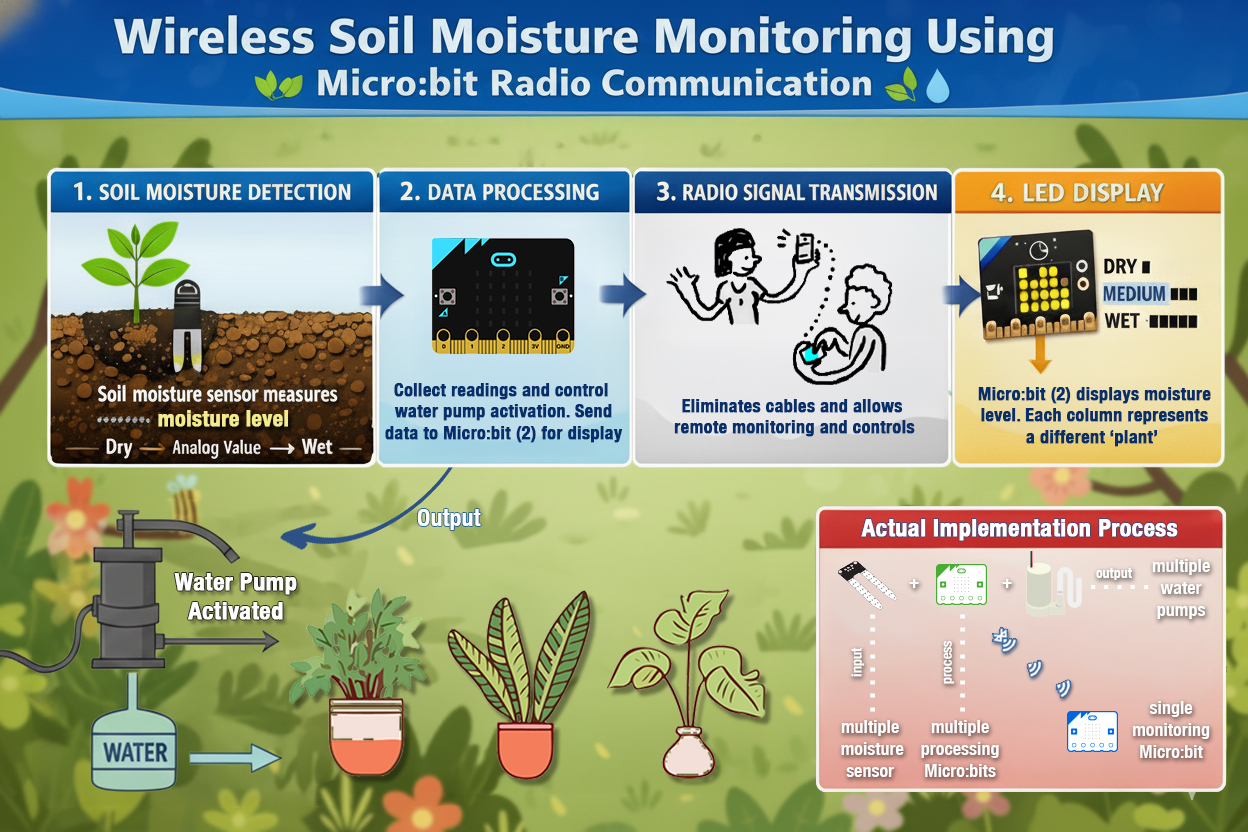
Wireless Soil Moisture Monitoring

This project uses the micro:bit to create a wireless soil moisture monitoring and irrigation system. Multiple sensors send data to Microbit (1), which transmits it to Microbit (2) for display.


Each LED column represents one sensor, allowing multiple plants to be monitored, and a water pump can be activated automatically when the soil is too dry.

Radio communication

Programming & design

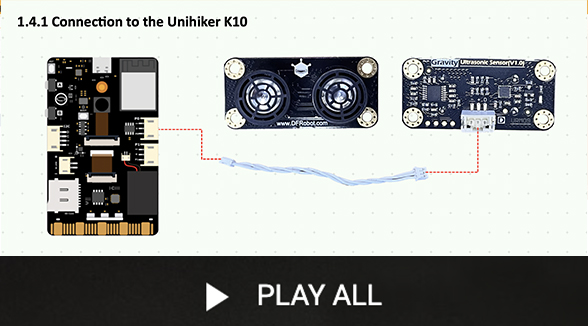
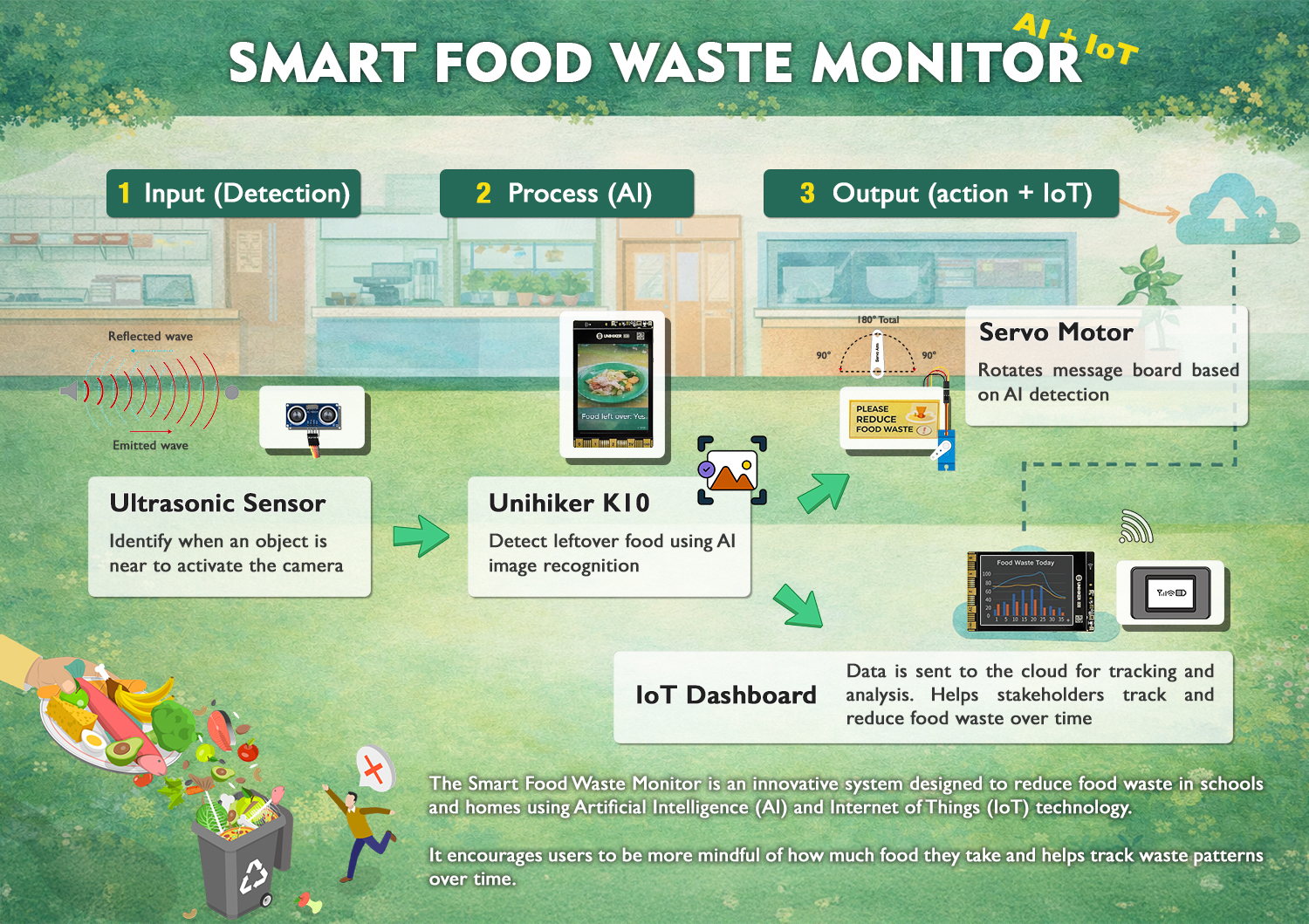
Unihiker K10 + Ultrasonic Sensor + Servo + IoT

Smart Food Waste Monitor

The Smart Food Waste Monitor is an innovative system designed to reduce food waste in schools and homes using Artificial Intelligence (AI) and Internet of Things (IoT) technology.


It encourages users to be more mindful of how much food they take and helps track waste patterns over time.

Internet of Things

Programming & design

Internet of Things

Programming & design

Updated as of 24 March 2026

Carnival & Showcase

1. Each Hackathon participating team should be made up exclusively of students who are not organizers,
volunteers, judges, sponsors, or in any other privileged position at the event.

2. All the students must uphold Academic Integrity in the competition and ensure that all project-related
information submitted and presented is their original work.

3. Teams can be disqualified from the competition at the organizers’ discretion. Reasons might include,
but are not limited to, breaking the Competition Rules, behaving in a way that violates the code of conduct,
or other unsporting behaviour.

4. The organiser reserves the right to amend the terms and conditions above due to unforeseen reasons.

1. Physical Prototype with component solution (please bring along laptop & charger)

2. Visual Aid for Presentation
Choose one of the following presentation options:
a. Poster (not larger than A2 size)
b. Presentation Slides
c. Video
d. Skit
Contents for Visual Aid: Team name, Project Title, Problem Statement, Solution, Impact of Solution

Prototype and Presentation Deliverables:
- Teams should complete their project prototypes before the Showcase Day. The Showcase Day is mainly for
touching up on the projects and decorating their booths.

- There are no limits on the inputs and outputs used.

- Each team is only given 5 minutes for their presentation on Showcase Day. This includes time for
prototype demonstration and Q & A from the panel of judges.

- Teams are encouraged to prepare posters and other decorative materials to beautify their booth.
Effort to engage the audience would also be observed.

- The maximum size of the poster is A2 size. Students should only decorate within their booth space.

- On the Showcase Day, once time is up, teams must stop all project refinement and booth decoration
Showcase Day (3 June 2026, Wednesday)
Venue: Pei Hwa Secondary School
**Layout plan  to be announce. Please check back later**

Booth Logistics
Each team will be provided with:
  • 1x Easel
  • 2x Tables
  • 2x Chairs
  • Extension Cable
  • PHSS Student Facilitator as Support (Technical assistance provided)
  • Champion
  • First Runner-up
  • Second Runner-up
  • Most Innovative Award
  • Best Presentation Award
  • Lionforge Best Design Award
  • People's Choice Award
  • Commendation Awards (X5)
List of Participating Schools
for 2026 Hackathon

To be updated! Please stay tuned!

Post-carnival and showcase updates, including information and media, will be shared here—please stay tuned!

120+

Schools Participated

515+

Students Participated

48~

Achievements Attained

5 Years

Conducted Hackathon

Support

Frequently Asked Questions

Yes, you may incorporate both microcontroller in one final prototype. However, do note that both microcontrollers will not communicate with one another and are expected to work as a standalone.

You may choose to use either micro:bit v1 or v2. However, do take note of the differences in features here.

Voting for your own team is not allowed.

1.⁠ ⁠Physical prototype with microcontroller solution

2.⁠ ⁠Presentation Aid (choose one option from below)
a. (Highly recommended) Poster (not larger than A2)
b. Powerpoint slides
c. Video
d. Skit

Only one poster is allowed (not larger than A2).

Yes, a technical consultation booth will be set up by our vendor, EPC Education, on the carnival day itself. In the event that you require last minute technical assistance, you may seek help from the trainers at the booth.

Question about the hackathon not answered? Please get in touch with Pei Hwa Secondary School directly using the following method:

Mr Koh Chong Peng, Teacher-in-Charge, at 65009580 (ext 287) or via email koh_chong_peng@moe.edu.sg
Mrs Jaslyn Ang, HOD Craft and Innovation, at 65009580 (ext 253) or via email chan_huaihui_jaslyn@moe.edu.sg
Pei Hwa Hackathon 2026

Proudly organised by

Supported by

© Copyright 2026 Pei Hwa Secondary School. All Rights Reserved. Hackathon Facilitation & Support by EPC Education Pte Ltd.